

 14 min
A solid link building strategy starts with a link gap analysis. But what exactly does that entail, and how can you use it to uncover hidden backlink opportunities for your website?
Read this step-by-step guide to analyze competitors' backlink profiles and identify untapped link prospects. You’ll learn basic and advanced tactics of backlink analytics and how to act on the findings.
Get ready to bridge the gap and grow in the SERPs.
What is a Backlink Gap Analysis?
A backlink gap analysis is a link building tactic to identify potential link-building opportunities by comparing your website’s backlink profile against competitors.
SEO specialists perform backlink analysis at the domain level and page level to spot more link prospects. They also filter the results by domain authority
3 Important Benefits of a Backlink Gap Analysis
Here are three ways to leverage a backlink gap analysis to drive your SEO performance. And they have nothing to do with the common knowledge that backlinks are crucial for search engine optimization.
Benefit #1: You keep an eye on the competition
Keep a close watch on your competitors and their link building strategies. Gain valuable insights into the following:
- What kinds of content and pages get the most links in your industry or niche?
- Which types of websites tend to link to your competitors?
- The link building tactics your rivals use, such as guest posting, infographics, linkable assets, or influencer collaborations.
- The gaps in your competitors' strategies that you can exploit.
- The keyword clusters your competitors are targeting with their backlinks.
In a nutshell, a proper competitor analysis informs your own SEO strategy and allows you to react timely to the changes.
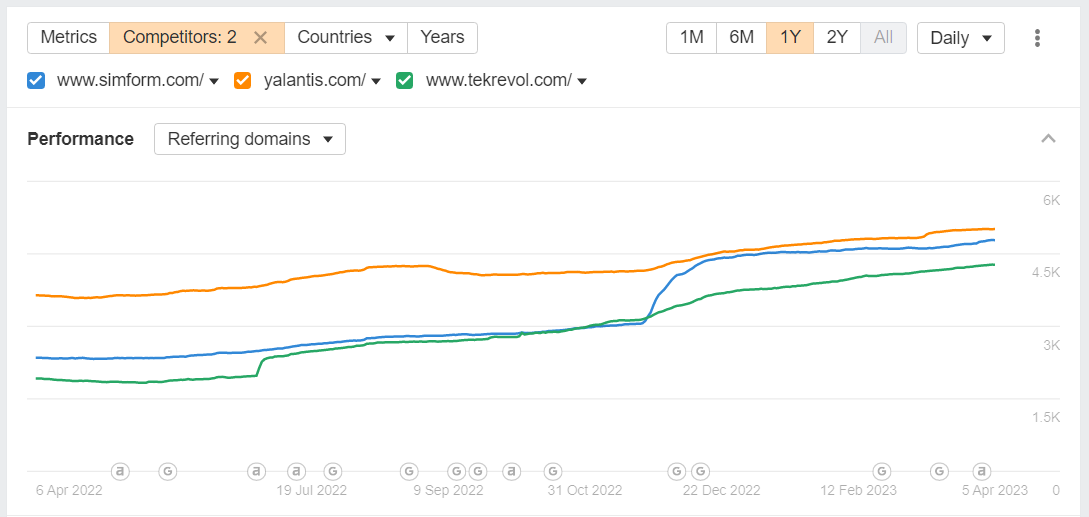
For example, you can compare referring domains of 2−3 and more sites at a time to detect activity surge. See this blue spike in referring domains for Simform? You can now create a report showing all the backlinks acquired during that time.
![How Link Building Can Help Your Lead Generation Efforts [2023]](https://digitalolympus.net/files/How-Link-Building-Can-Help-Your-Lead-Generation-Efforts-_2023_-1.png)
![A Guide to Local Link Building [Strategies, Tips & More]](https://digitalolympus.net/files/A-Guide-to-Local-Link-Building-Strategies_-Tips-_-More-1.png)
![Manual Link Building [Practical Guide with Strategies]](https://digitalolympus.net/files/Manual-Link-Building-Practical-Guide-with-Strategies-1.png)